
UK iGaming regulation explainer
Casino Not On GamStop: How These Sites Work for UK Players
 Available in GB
An independent walk-through of what casinos not on GamStop actually are, where they sit in UK law, and the trade-offs you carry the moment you deposit there. More than 562,000 people have registered with GamStop since the scheme launched in 2018, and yet offshore sites - chiefly licensed in Curaçao, Anjouan and occasionally Malta - remain technically reachable. This guide explains why, and what you genuinely give up by playing there.
The five-minute version
- What it means. An online casino that holds only an offshore licence (most often Curaçao, increasingly Anjouan, sometimes Malta) and is not connected to the UK national self-exclusion database. A UK player self-excluded through GamStop is not blocked there.
- Legal position for the player. No UK statute prohibits a player from using an offshore site. Operating without a UK Gambling Commission licence is an operator offence under the Gambling Act 2005, not a player offence. UK consumer protection does not follow you abroad.
- Key risks. No UK Gambling Commission protection or dispute resolution, very high effective bonus wagering of 40x to 70x, maximum-win caps, weak KYC at deposit but heavy KYC at withdrawal, and operators that change licensing entities between brands.
- Tax position. Player winnings are tax-free in the UK across all operators. The 21% to 40% Remote Gaming Duty rise from 1 April 2026 falls on operators, not players, although the Office for Budget Responsibility expects most of that cost to pass through into worse odds and smaller bonuses.
- Who this is not for. Anyone who signed up to GamStop because of a gambling problem. Using a non-GamStop site directly undercuts the help you asked for. The National Gambling Helpline (GamCare) is free on 0808 8020 133, around the clock.
What a casino not on GamStop actually is
The plain definition is simple. A casino not on GamStop is an online casino that holds only an offshore gambling licence and is not connected to the GamStop database. Because GamStop is wired into UK Gambling Commission licensees only, any operator licensed solely in Curaçao, Anjouan, Kahnawake or similar jurisdictions sits outside its reach. A player who has self-excluded through GamStop will be blocked at the UKGC-licensed sites that account for the regulated UK market, but the offshore site has no way to see that exclusion.
That bare technical answer is not the whole story. The phrase tends to bundle in three other things people are looking for at the same time: bigger bonuses, lighter verification at sign-up, and access to game types restricted on the UK market such as crash games and bonus-buy slots. Most offshore operators lean into all three. The structural reason the niche exists is the GamStop block, but the marketing the niche runs on is wider freedom from UK consumer-protection rules. It is worth keeping those two things separate when you think about who these sites suit and who they do not.
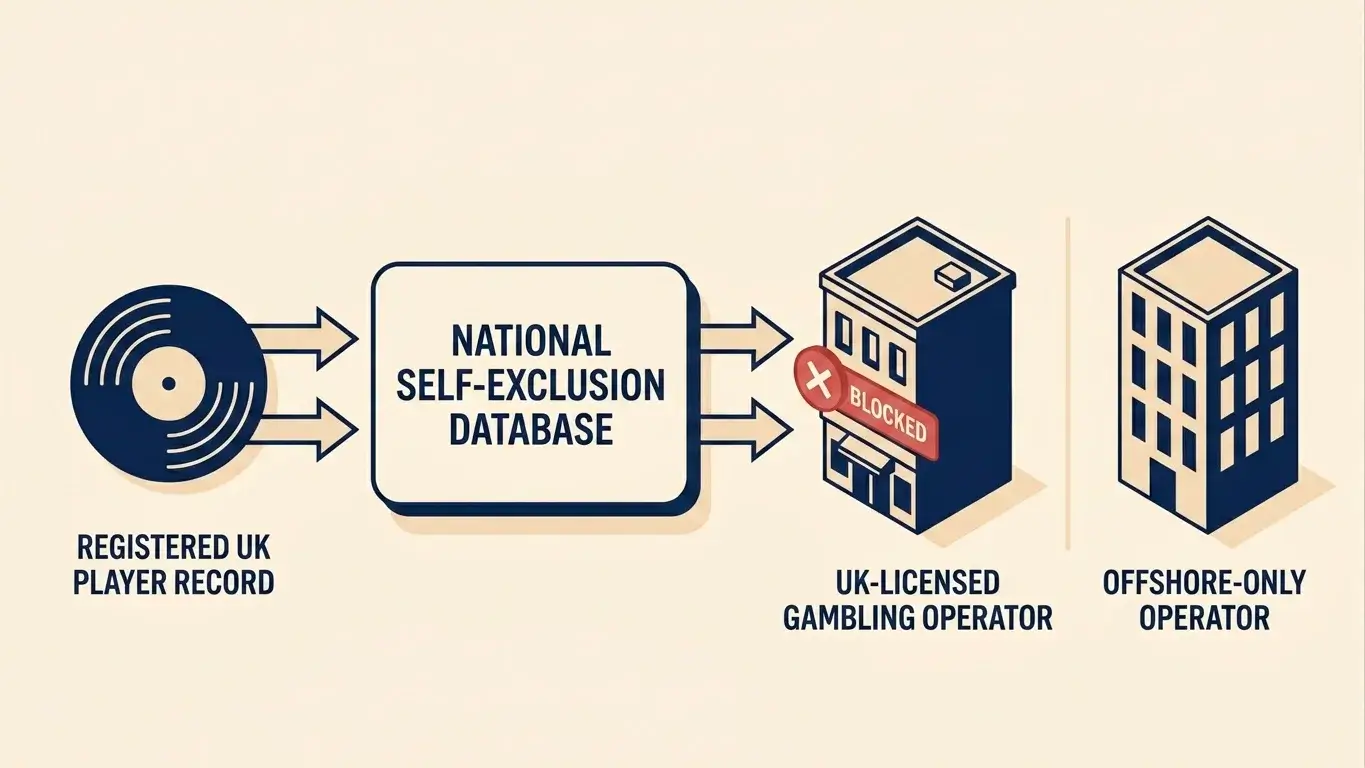
One last definitional point. People often confuse non-GamStop sites with unlicensed sites. They are not the same thing. A non-GamStop casino can still hold a real and current licence, just not a UK one. Whether that offshore licence gives you any meaningful protection is a separate question, and one this guide returns to in the safety section. For UK regulator purposes any operator that targets GB consumers without a UKGC licence is unauthorised, and the Commission has been gaining tools to block such sites at the network level since the 2023 White Paper.
Independent tool
The Recourse Ledger
Set the four facts below and see what actually stands behind a deposit at an offshore casino: who regulates it, where a refused payout gets escalated, and whether the money can be pulled back at all.
You are excluded, and this operator cannot see it. A deposit here works against the block you asked for. The National Gambling Helpline is free on 0808 8020 133, 24 hours a day.
Recourse score
47
Thin recourse. A complaints process exists on paper; enforcement is a separate question.
£100 would sit entirely outside UK consumer protection.
The score weights licence tier and payment reversibility against the UKGC baseline of 100. It is an information tool, not an endorsement of any operator, and not legal or financial advice. 18+. If gambling is causing you harm, call 0808 8020 133 free, around the clock.
How GamStop self-exclusion works
GamStop is run by The National Online Self-Exclusion Scheme Limited (NOSES), a not-for-profit body, and it launched in 2018. A single registration covers all UK Gambling Commission-licensed online gambling sites for a fixed period the user chooses: six months, one year or five years. The scheme states that the exclusion is in force within 24 hours. Once it is active, every UKGC licensee must check incoming customers against the GamStop database and refuse to open or operate an account for anyone listed.
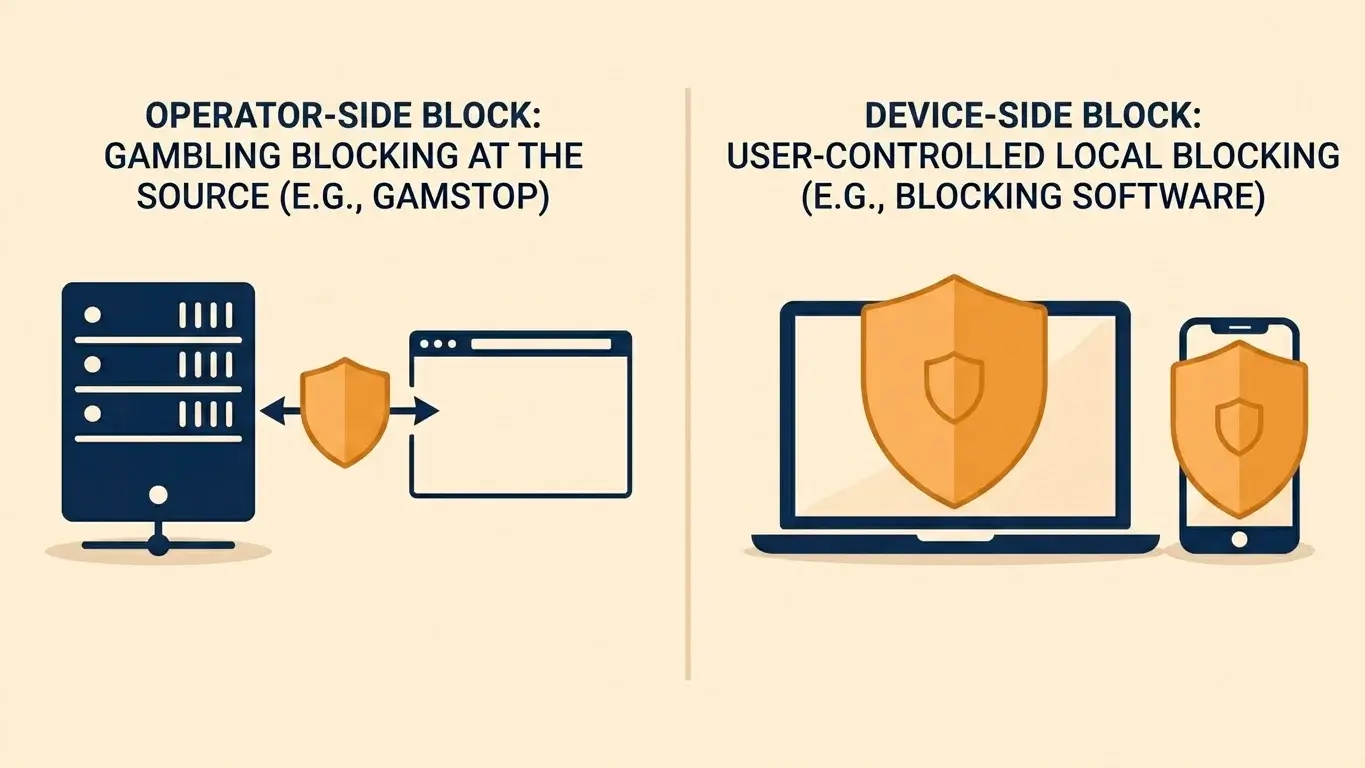
The exclusion is operator-side. That phrase matters. Nothing is installed on the player's device and the block is not enforced by the player's browser or phone. The operator does the lookup against GamStop's records every time someone tries to register or log in. If a match comes back, the operator must turn the customer away. That design choice keeps it simple for the player, but it also explains why an offshore-only operator is not bound by it: a casino that is not a UKGC licensee never consults GamStop in the first place.
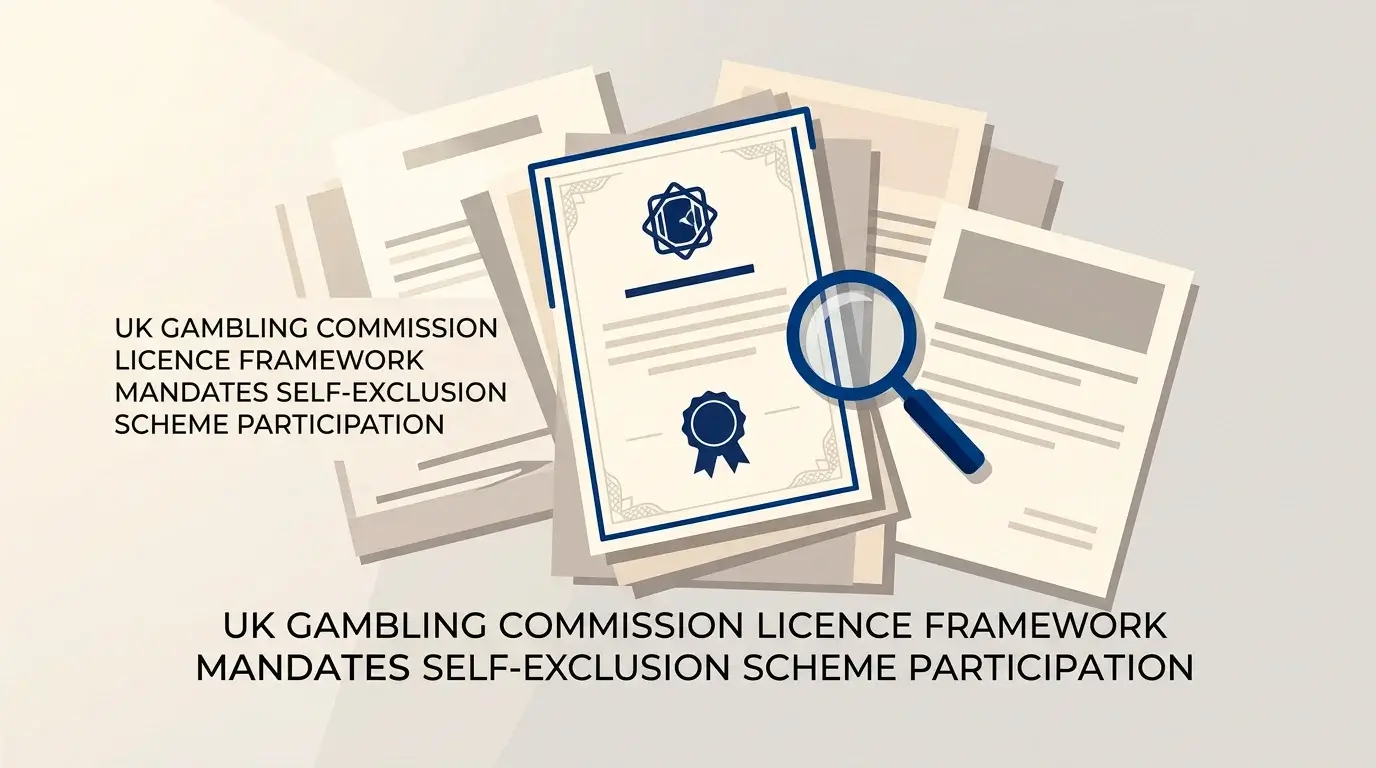
The mandate has hardened over time. Participation in GamStop became a UKGC licence condition for online operators on 31 March 2020, set out in Licence Conditions and Codes of Practice Social Responsibility Code Provision 3.5.5. Two operators that missed the deadline (Dynamic, trading as Prophet, and Sportito) had their licences suspended in April 2020. From 1 April 2024 the obligation was extended to operators that take bets by telephone and email, closing a long-running gap. Total registrations with the scheme had passed 562,000 by the end of 2025, per the scheme's own H2 2025 report on gamstop.co.uk.
A common point of confusion sits next to all of this. GamStop is not the only self-exclusion tool. Device-level blockers such as Gamban and BetBlocker install on a phone or computer and block gambling content regardless of operator licence. The TalkBanStop bundle pairs Gamban with GamStop and GamCare counselling for a fuller wrap. None of those are part of the GamStop database itself. If you want a deeper walk-through of the mechanism, the dedicated page on how GamStop self-exclusion works covers the operator-side technical model in more detail.
Why offshore sites stay reachable
Three things keep non-GamStop casinos within reach of a UK player. The first is the structural one already described. GamStop is a UKGC licence condition rather than a universal national restriction, so a casino licensed solely outside the UK has no connection to the database. The second is that no UK law makes it an offence for an individual to access such a site. The offence under the Gambling Act 2005 and the Gambling (Licensing and Advertising) Act 2014 sits on the operator that targets GB consumers without a UK licence. The third is the practical fact that the open internet is hard to lock down at the network layer.
That third point is changing. Since the Gambling Act Review White Paper of 27 April 2023, the UK Gambling Commission has been gaining stronger tools to disrupt the black market, including engagement with internet service providers and IP-blocking of unlicensed operators marketing into Great Britain. The intention is clearly to make access harder over time, not just punish operators after the fact. UK retail banks have also become more willing to block transactions that look like they are heading to an unlicensed gambling merchant. Practically that shows up as failed deposits and the occasional account review.
It is worth being honest about what this combination does and does not do. It makes the offshore market noisier and more friction-prone for a UK player rather than impossible to enter. People who are determined to gamble while excluded usually find a way through, and the offshore sites that advertise to UK searchers know that. From a recovery and harm-reduction point of view, the right answer is rarely a smarter way around the block. It is generally to pair GamStop with a device blocker and to use the support services listed at the foot of this page. That is the approach the National Gambling Support Network points to.
The offshore licensing landscape after the 2024 reform
If you understand the licensing layer, most of the rest of the offshore market starts to make sense. The headline change in the last two years is that Curaçao, which historically dominated this corner of the iGaming map, has overhauled how its licences are issued. The new Landsverordening op de kansspelen (LOK) was adopted by the Curaçao Parliament and came into force on 24 December 2024. It replaced the old master and sub-licence system with direct licensing by the Curaçao Gaming Authority. The four historic master-licence holders, including Antillephone N.V. and Curaçao Interactive Licensing N.V., were wound down as the new framework took over.
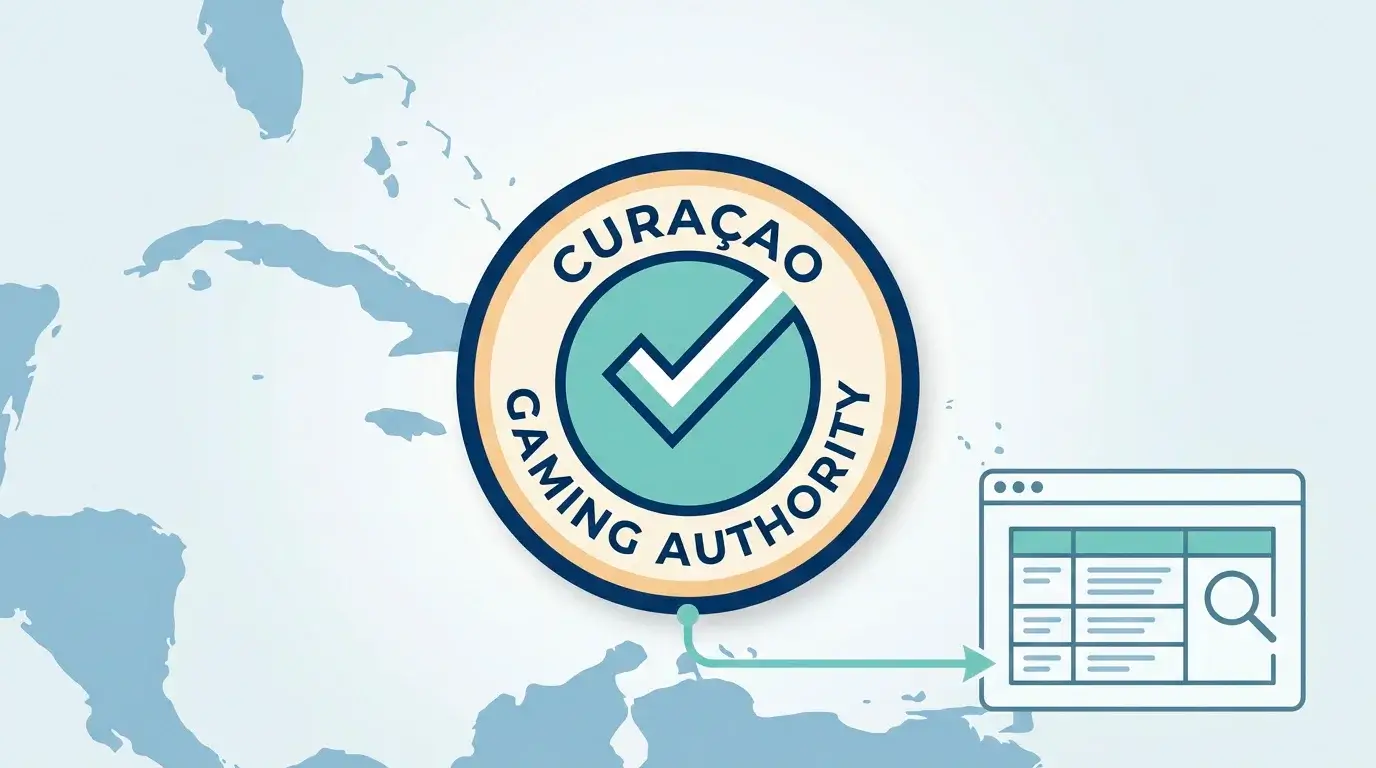
The new Curaçao rules require local presence, at least one production server on the island, enhanced fit-and-proper checks, anti-money-laundering controls, a formal complaints process and access to independent alternative dispute resolution. Operators must show the official Gaming Control Board certification badge linking through to a verification page at cert.gcb.cw. That is genuinely useful for players, because it lets you confirm whether a casino's licence claim is current rather than relying on a badge image in the footer. It does not turn Curaçao into a high-trust regulator overnight, and quality across operators still varies widely, but the verification mechanic is a step forward.
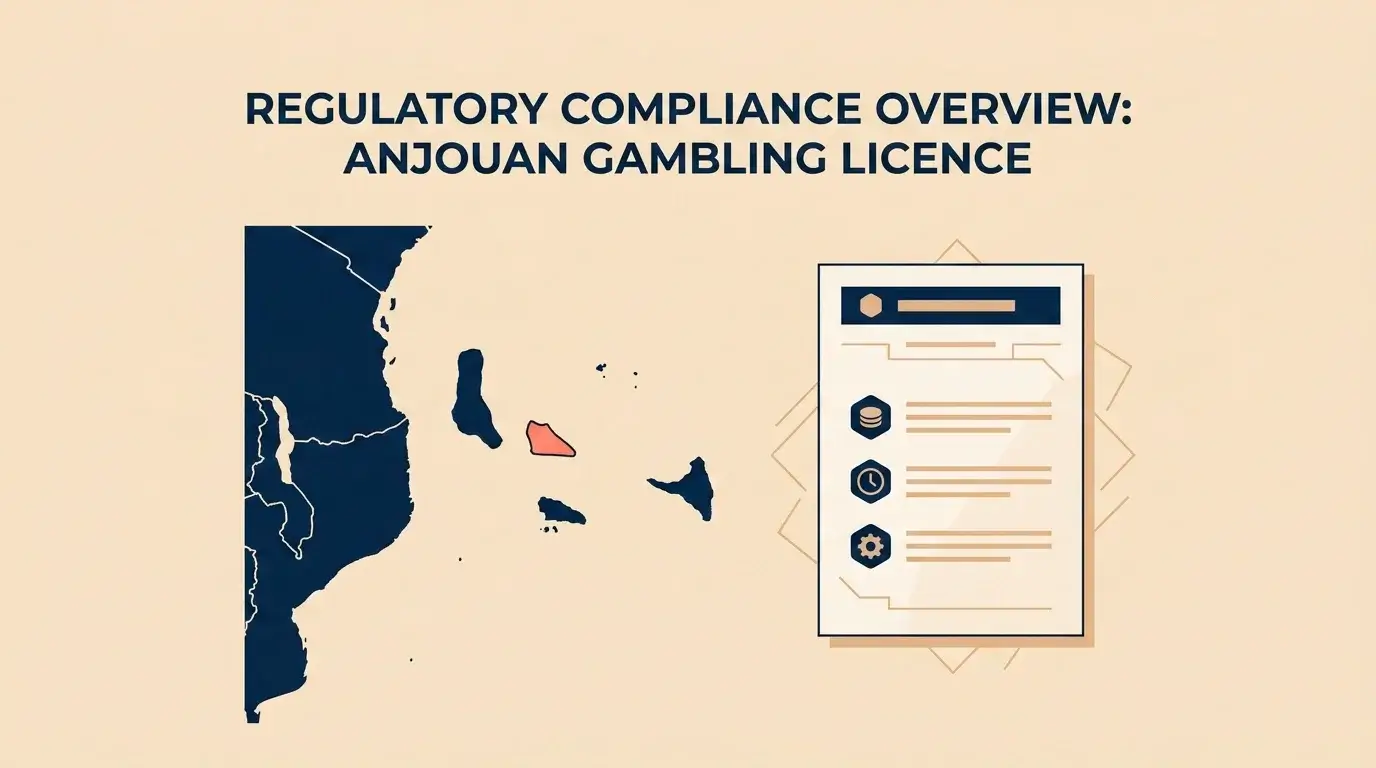
Beyond Curaçao there are two other names worth knowing. Anjouan, an autonomous island within the Union of the Comoros, has emerged as the cheap, fast alternative. Industry advisory sources note licence fees in the region of EUR 17,000 with no local-staff requirement and roughly four-week processing. That speed is exactly why some of the newest non-GamStop brands sit there: it makes it easy to launch and easy to migrate a brand if a previous entity loses standing. Anjouan does not match Curaçao on supervisory depth, and banking partners treat it accordingly.
Malta is the higher-tier outlier some brands claim. The Malta Gaming Authority is the strictest of the offshore regulators, with the most player-protection muscle and the most genuine alternative dispute resolution. A genuine Malta-licensed operator is unusual on the non-GamStop SERP and not impossible to find; some claims are real, others are stale or aspirational. The safe move is to verify any Malta claim directly with the MGA register before drawing comfort from the badge. Other jurisdictions that occasionally appear in this corner of the market include Kahnawake in Canada and PAGCOR in the Philippines.
Where UK players stand legally
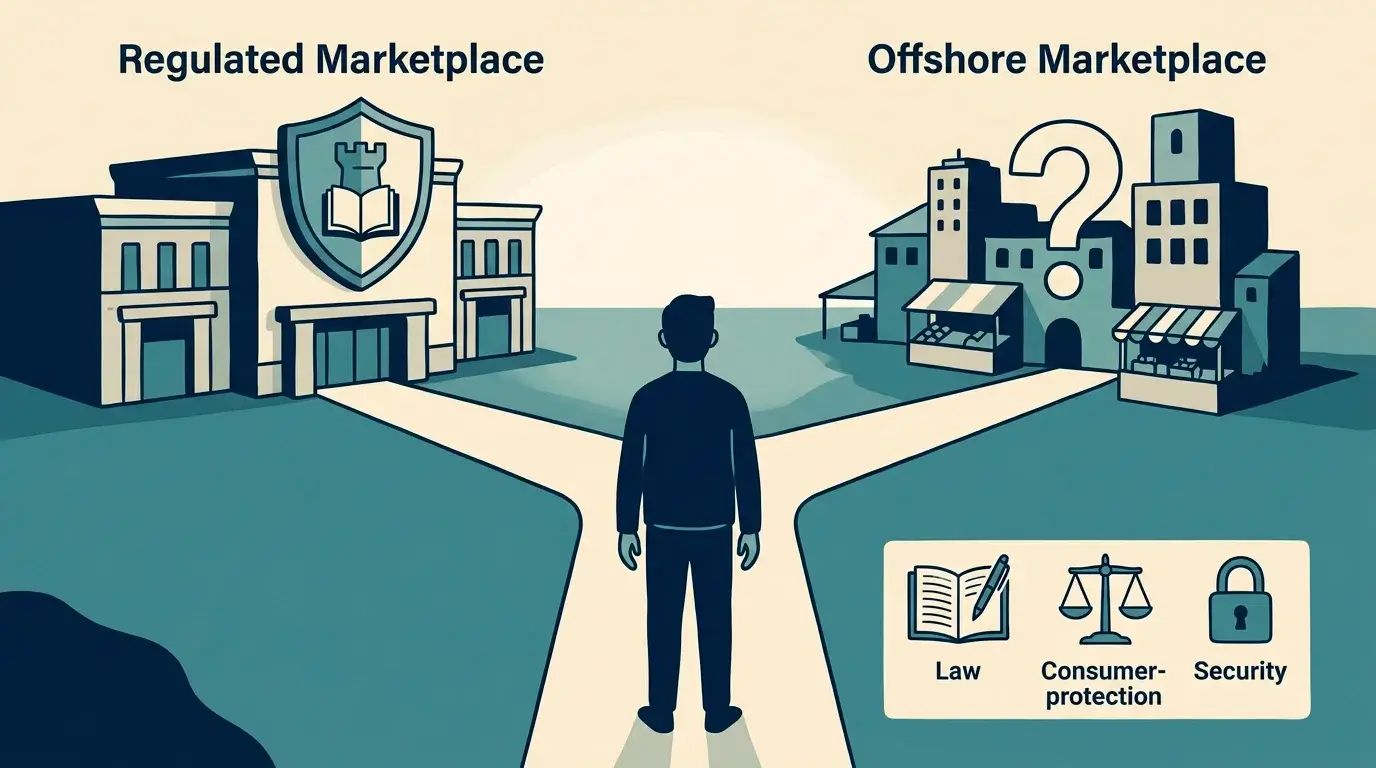
The legal position for a UK player is permitted but unprotected. No UK statute makes it a criminal offence for a person to access an offshore gambling site. The framing of the Gambling Act 2005 puts the duty on operators rather than on individual players, and the Gambling (Licensing and Advertising) Act 2014 reinforced that by moving regulation to the point of consumption: any operator that transacts with or advertises to a customer in Great Britain must hold a UKGC licence regardless of where the operator is based. The offence is committed by the operator, not the customer.
The honest framing is that this is a grey area rather than a protected right. Self-exclusion through GamStop is described as a binding commitment between the player and UKGC operators, but the binding force only runs against those licensees. No UK consumer protection follows you to an offshore site. There is no UKGC alternative dispute resolution to escalate a refused payout, no statutory affordability check protecting you from over-deposit, and no UK regulatory recourse if an operator changes its terms unilaterally. Banks are increasingly likely to decline card payments and even close accounts that show repeated unlicensed-gambling activity.
Tax is the question that nearly always comes up here, and the answer is the same on both sides of the line. UK player winnings are tax-free across all operators, including offshore ones. The tax burden sits on operators through Remote Gaming Duty, which under the Autumn Budget 2025 rises from 21% to 40% on 1 April 2026 for online casino, slots and bingo revenue. The Office for Budget Responsibility expects operators to pass through roughly 90% of that cost via worse odds, smaller bonuses and reduced game return-to-player. That is a UKGC-market story, but it indirectly explains why offshore offers look generous by comparison: they are not absorbing the same regulatory cost.
None of the above is legal or tax advice. Players with substantial or recurring winnings should talk to a qualified adviser, and the full statutory position is set out in legislation.gov.uk for the original Gambling Act and the 2014 amendment cited above. The dedicated page on the legal status for UK players walks through the same ground in more depth, including the consumer-protection gap.
Judging whether a non-GamStop site is safe
The harder part of this niche is not finding sites that will accept you. It is judging which of them will pay you when you win. Because UK consumer protection is absent, the burden of due diligence sits with you. Decent non-GamStop operators do exist; so do operators that close accounts, void winnings, and migrate brands across licensing entities to stay one step ahead of complaints. The same dynamic shows up across the published case files: the FinTelegram coverage of one Curaçao operator that ran 30 to 40 brands, faced bankruptcy proceedings in 2023, lost its Curaçao licence around November 2023, then re-emerged through a new operating entity, is the textbook illustration. The operator is by no means the only one, and the pattern repeats often enough that you should treat any single licence claim as time-sensitive.
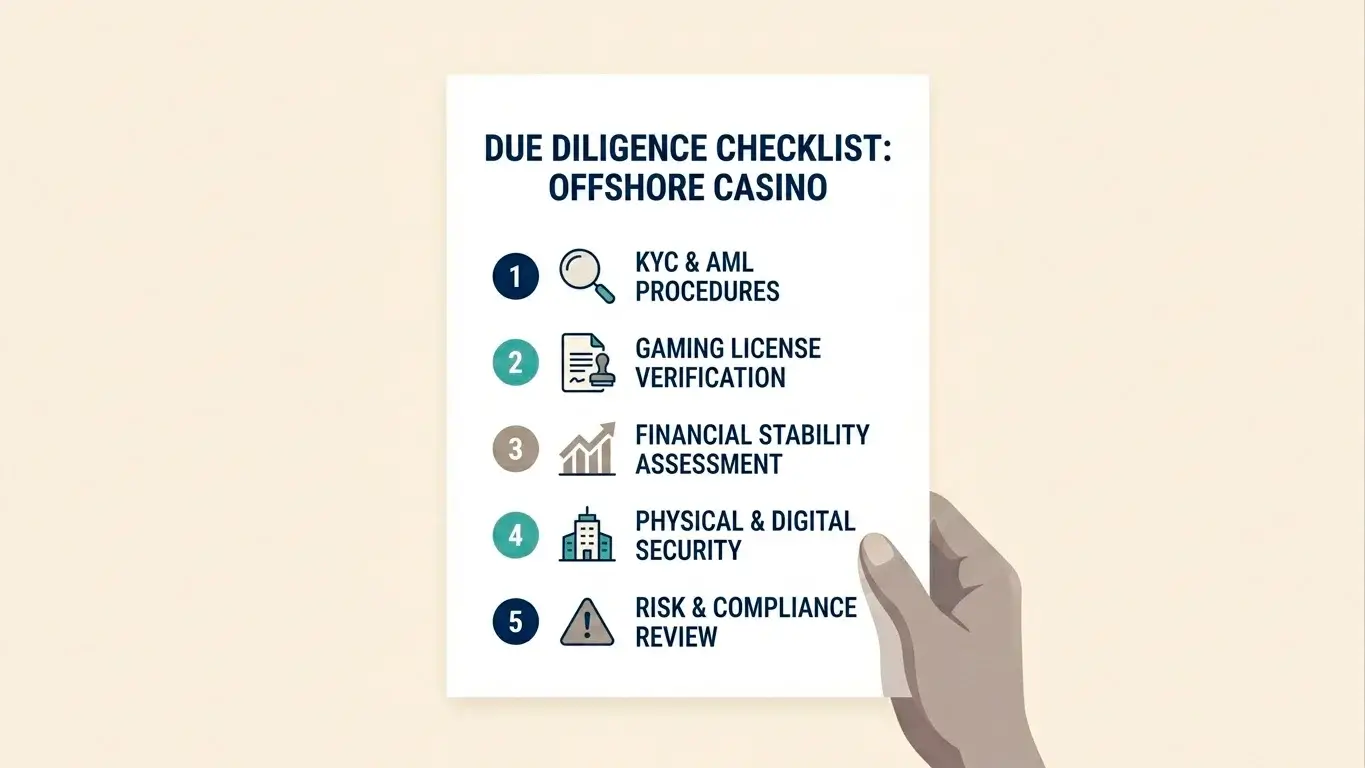
The other useful framing is that the deposit and the withdrawal are not symmetrical. Offshore casinos make depositing easy on purpose: instant cards, instant e-wallets, instant crypto, no documents requested. The friction is concentrated at withdrawal, when the operator's anti-money-laundering, fraud and bonus-abuse controls finally run. That is exactly when documents and patience get demanded, and it is where complaints usually arise. The dedicated page on how to check a non-GamStop casino is safe sets out the full checklist; the page on no-KYC and verification at non-GamStop casinos explains why the deposit-easy, withdrawal-hard pattern is the rule rather than the exception.
Payments: cards, e-wallets and crypto
The mix of payment methods at offshore sites looks similar to the UK regulated mix on the deposit side, then diverges sharply on the crypto question. Debit cards remain the most common method; credit cards have been banned for gambling under UKGC rules since 2020 and, by extension, are usually declined by UK card issuers in this context too. PayPal still appears at many of the larger offshore brands and typically carries a minimum deposit around £10. Apple Pay and Google Pay show up where the underlying card processor supports the merchant code. Paysafecard is a budget-control prepaid option for deposits but is rarely available for withdrawal, which makes it a one-way tool.
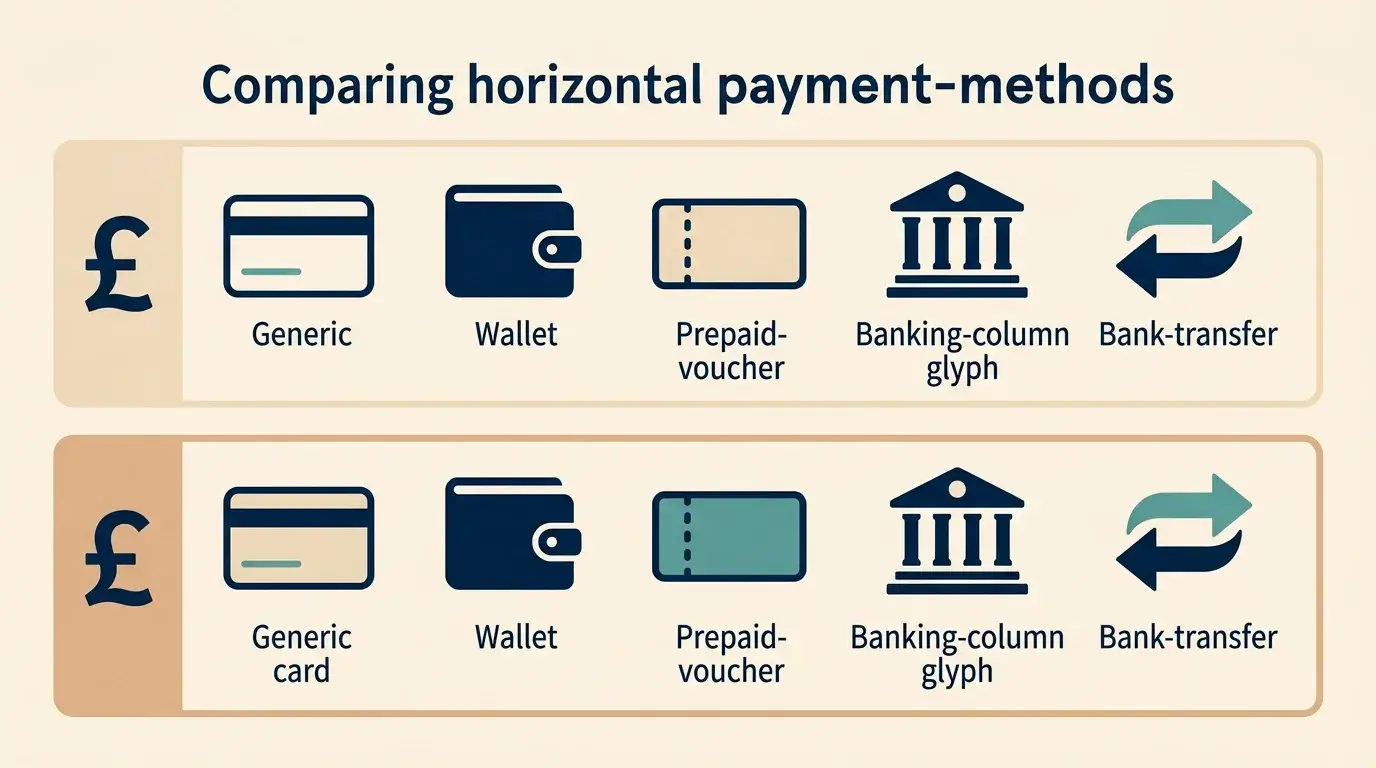
Skrill and Neteller cover the higher-volume e-wallet niche and are widely accepted, although both are frequently excluded from welcome-bonus eligibility, so check the terms before depositing through them. Trustly, AstroPay, MuchBetter and direct bank transfer round out the conventional methods. The point that tends to surprise newcomers is that crypto is the genuine differentiator. Bitcoin, Ethereum and stablecoins such as USDT are widely accepted at offshore sites and are essentially absent from the UKGC regulated market. Crypto payouts can be quick, but they are not exempt from the operator's withdrawal-stage identity checks, and crypto volatility is a real cost to think about when a winning balance sits in BTC rather than GBP.
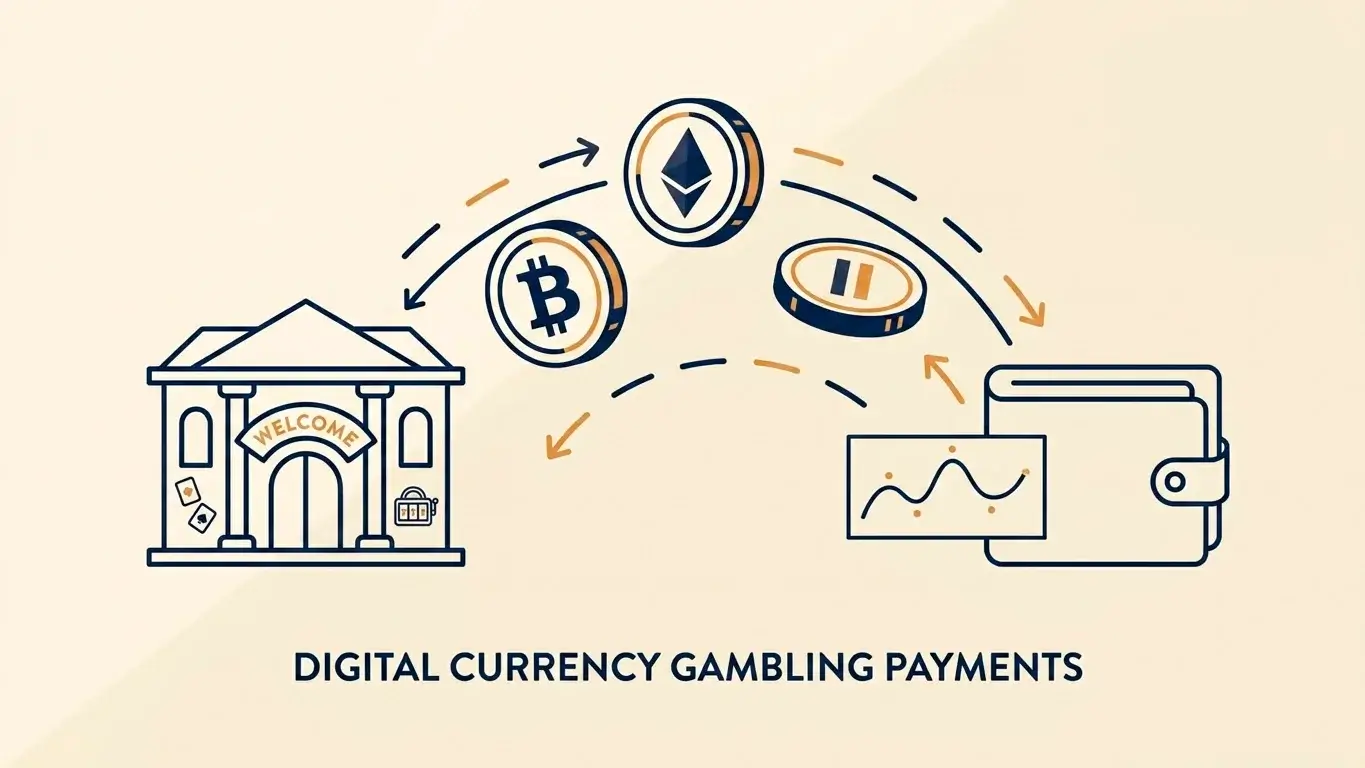
Two practical frictions are worth holding in mind. UK retail banks may decline or block card payments that look like they are heading to an unlicensed gambling merchant; that is not new, but it has become more common since the 2023 White Paper. Marketing copy that promises instant or no-checks withdrawals is undercut by withdrawal-stage KYC, and "no documents needed" almost always means "no documents needed yet". The dedicated page on payment methods at non-GamStop casinos covers each rail in more depth, including realistic processing windows.
Bonuses and wagering: reading the small print
Bonuses are the marketing engine of the non-GamStop niche. Welcome offers of 100%, 200% and even 500% deposit matches, plus packages combining match bonuses with free spins, are routine. The size of the headline is rarely the meaningful number. The meaningful numbers are the wagering requirement, the maximum bet allowed while wagering, the maximum cashout (the win cap), the game weighting and the time limit. Read those five together and you can usually tell within thirty seconds whether the offer is worth touching.
The wider economic context matters too. UKGC operators are absorbing a higher cost of doing business in 2025 and 2026: the new statutory levy is administered by the Commission and active from 1 October 2025, online slot stake limits of £5 per spin for 25+ and £2 per spin for 18-24 have been in force since spring 2025, and Remote Gaming Duty steps up to 40% from 1 April 2026. The Office for Budget Responsibility's analysis is that operators pass through around 90% of additional cost via worse odds, smaller bonuses and reduced RTP. That asymmetry is exactly why offshore bonuses look loud by comparison. They have not been priced against UK regulatory cost.
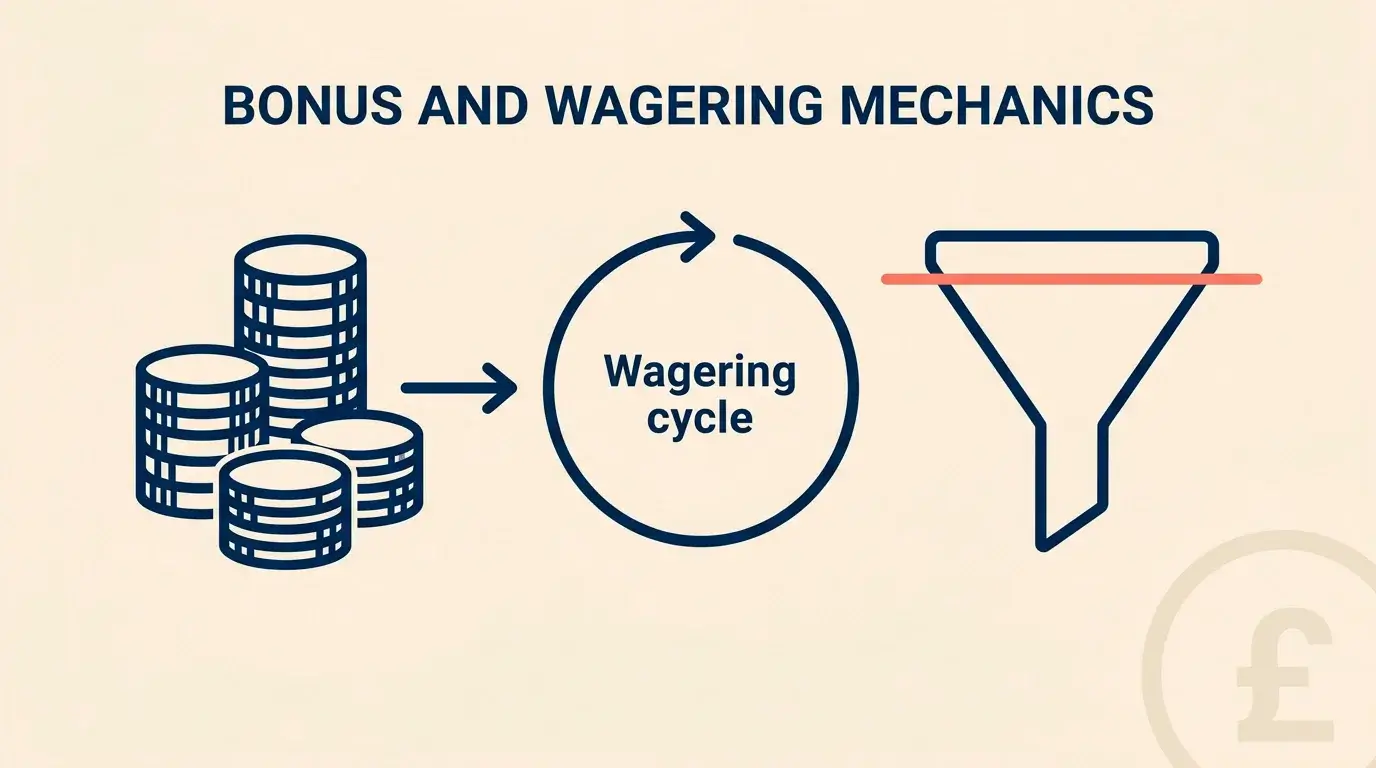
Worked example. Take a 200% match bonus on a £100 deposit with a £200 bonus, wagering 50x bonus, maximum bet £5, maximum cashout £500. You would need to stake £10,000 within the time limit, never exceeding £5 per spin, on weighted-eligible games, and the absolute upper limit on what you could withdraw from bonus winnings is £500 regardless of how lucky you get. That is the model, and the dedicated page on non-GamStop bonuses and wagering requirements walks the same maths through more variants. The takeaway is not that bonuses are bad. It is that the headline is the start of the conversation, not the end.
How the operator landscape is structured
An honest comparison of named operators is not possible at this site without a level of in-the-moment verification we have not been able to complete to the standard our editorial policy requires. Founding years, licence numbers and even licensing jurisdictions conflict across the public review sources we surveyed, sometimes by several years and sometimes between Curaçao and Malta for the same brand. We will not publish a named ranking on that basis. Instead, this section maps the landscape into useful categories so you can place any specific brand you are researching elsewhere.
- By licensing jurisdiction
- The mainstream offshore tier is dominated by Curaçao under the post-LOK regime that took effect on 24 December 2024. A second, growing tier sits on Anjouan licences for their speed and cost. A smaller and more variable tier claims Malta Gaming Authority oversight. Brands that claim no jurisdiction at all, or that have an unverifiable footer, sit in a residual category players should avoid.
- By launch period
- Legacy non-GamStop brands launched between roughly 2018 and 2021, often during the run-up to the UKGC's stricter rules. A second wave launched from 2022 onward, including many crypto-first sites. A third, newer wave from 2024 onward sits on fresh Curaçao or Anjouan paperwork and has the thinnest reputation track record.
- By specialisation
- Three patterns recur: hybrid casino-and-sportsbook platforms that lead with welcome bonuses; pure casino sites that lead with slots libraries and crash titles; and crypto-native brands that lead with rapid token payouts. The same operator group sometimes runs all three formats under different brand names.
- By advertised features
- Common marketing features are large welcome bonuses, no or light KYC at sign-up, instant or fast withdrawals, no UK affordability checks, broad payment menus including crypto, and access to game types restricted at UKGC sites such as bonus-buy slots and crash games.
- By risk profile
- The recurring risks are absent UK consumer protection, effective bonus wagering of 40x to 70x, maximum-win caps that cap winnings well below the headline, withdrawal-stage KYC creating payout disputes, opaque ownership, and operator-entity switching where the same beneficial owners run brands across multiple licensing entities. Brand-cloning (visually similar sites sharing a parent) tends to share the same complaint pattern.
The reason we do not publish a named list is straightforward. The independent value of this site rests on saying so when we cannot verify what we would otherwise be inviting readers to act on. If you are weighing a specific brand, the safety page on how to check whether a non-GamStop casino is safe walks through the verification steps that turn marketing claims into evidence you can actually rely on.
Common questions answered
Are casinos not on GamStop legal in the UK?
No UK law makes it a player offence to access an offshore casino. The obligations under the Gambling Act 2005 fall on operators rather than on individual players. Offering gambling to GB consumers without a UK Gambling Commission licence is an operator offence. Using such a site is not a player offence, but no UK consumer protection applies, the UKGC's alternative dispute resolution is not available to you, and UK banks may block transactions.
Are non-GamStop casinos safe?
Safety varies enormously and there is no UK regulator to fall back on. The site is only as safe as its offshore licence holder and parent operator. Objective red flags include very high effective bonus wagering of 40x to 70x, maximum-win caps, account closure or confiscation of winnings on large wins, weak KYC at deposit but heavy KYC at withdrawal, and operators that migrate between licensing entities to escape complaint history. Verify any licence claim at source rather than trusting a badge.
Can I play if I am self-excluded on GamStop?
Technically yes, because offshore-only operators are not connected to the GamStop database and cannot see your exclusion. Practically this undermines the reason you signed up. If you registered with GamStop because of a gambling problem, continuing to gamble on non-GamStop sites is the pattern recovery services are designed to interrupt. The National Gambling Helpline on 0808 8020 133 (operated by GamCare) is free and available 24 hours a day, 7 days a week. The dedicated page on how to remove yourself from GamStop the legitimate way covers what to do if you no longer want to be on the scheme.
Are winnings from non-GamStop casinos taxed in the UK?
Gambling winnings are generally tax-free for UK players, including from offshore operators. The tax burden sits on operators through Remote Gaming Duty, which rises from 21% to 40% on 1 April 2026 for online casino, slots and bingo revenue. The Office for Budget Responsibility expects most of that cost to pass through into worse odds and smaller bonuses on the UKGC market. This is general information, not tax advice. Players with substantial or recurring winnings should speak to a qualified adviser.
What licences do non-GamStop casinos hold?
Curaçao is the dominant jurisdiction. Following the Landsverordening op de kansspelen (LOK), in force from 24 December 2024, licences are now issued directly by the Curaçao Gaming Authority rather than through the historic master and sub-licence system. Anjouan in the Comoros is a cheaper, newer alternative with thinner oversight. Some sites claim a Malta Gaming Authority licence, which is the strictest of the offshore tier; verify any Malta claim directly with the MGA register.
Do non-GamStop sites require KYC?
Most do, but at a different point. The selling phrase "no KYC" usually means no verification at sign-up or deposit. Identity checks are typically enforced at withdrawal, driven by AML and CFT rules in the licensing jurisdiction and by fraud and bonus-abuse controls. UKGC sites verify up front before play. Crypto deposits do not remove the cash-out check. Completing verification early is the practical way to limit payout delays.
How do I remove myself from GamStop?
GamStop cannot be cancelled, paused or shortened before the chosen period expires. At the end of the period it does not lift automatically. You have to contact GamStop, complete identity verification, and then observe a mandatory 24-hour cooling-off period before UKGC operators restore access. The scheme retains data for up to seven years. The dedicated page on how to remove yourself from GamStop the legitimate way covers the process in full, including support for those who are unsure whether to leave the scheme.
Putting this guide into practice
What you do next depends on which group you are in. If you are on GamStop because of a gambling problem, the recommendation is straightforward: do not use the offshore route, respect the exclusion you set up, and use the National Gambling Helpline and TalkBanStop. If you are not on GamStop and you are weighing whether the offshore market is for you, the practical work is reading the safety page and the bonuses page before any deposit, and verifying any licence claim through the regulator's own register rather than trusting a badge image. The good outcomes in this market are real but earned, and the worst outcomes happen to people who skip the verification step.
The rest of this site is organised so you can do that without rereading the full guide each time. The how GamStop self-exclusion works page covers the operator-side mechanism in depth. The legal status page goes deeper on the player's position under UK law. The legitimate removal page covers what to do if you want off the scheme. The safety checklist and KYC explainer sit alongside the practical payments and bonuses and wagering pages. Read them in any order. The point is to be the player who already knew the rules of the game before they sat down.