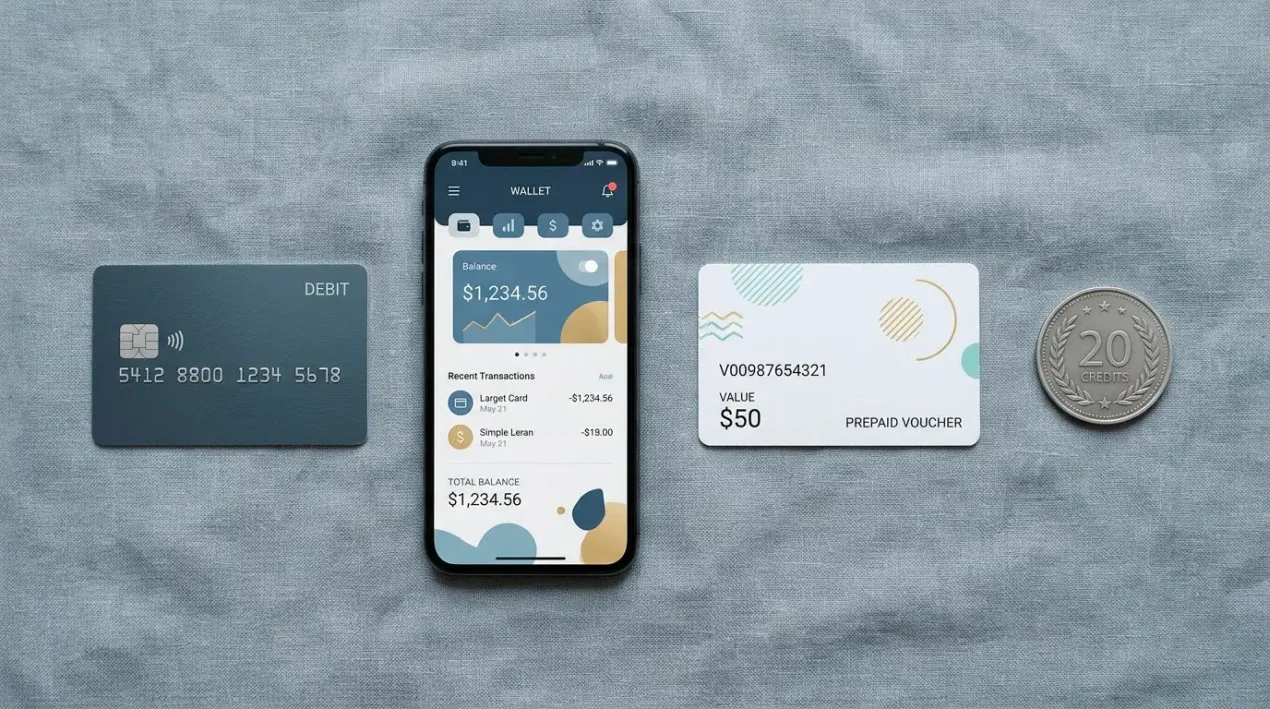
Payment Methods at Non-GamStop Casinos: Cards, E-Wallets and Crypto

Updated August 2026
Licensed
Available in GB
Fast payouts
18+ Only
Payment Methods at Non-GamStop Casinos: Cards, E-Wallets and Crypto
Last updated: Reading time: 6 min

Money moves differently at offshore casinos than at UK-licensed ones, and the differences are worth understanding before you deposit a single pound. This is a neutral, GBP-anchored reference to the methods you will actually encounter, from familiar debit cards through to cryptocurrencies that barely exist on the regulated UK market. It also names the friction that the marketing tends to skip: UK banks that decline gambling transactions, and “fast withdrawal” promises that run straight into verification at cash-out.

Start with debit cards and the credit-card ban that still applies

Debit cards from Visa and Mastercard remain the most familiar deposit route, and most offshore casinos accept them in GBP. The thing to understand is that the UK ban on gambling with credit cards is a rule that travels with the card, not with the casino. The Gambling Commission banned credit-card gambling from , and that ban also covers funding an e-wallet with a credit card and then using the e-wallet to gamble. So while an offshore site might technically display a credit-card option, your UK card issuer is the party that can decline the transaction.

A debit card positioned next to a pound sterling symbol, representing GBP card deposits at offshore casinos.

Debit cards are quick for deposits but are not always the fastest for withdrawals, where processing depends on the operator. They also leave a clear record on your bank statement, which matters if you are trying to keep gambling spend visible and controllable.

Weigh up the e-wallets: PayPal, Skrill, Neteller and Paysafecard

E-wallets are the middle ground between cards and crypto. PayPal is one of the most widely recognised, with deposits commonly starting around £10, though its availability at offshore sites is patchier than on the regulated UK market. Skrill and Neteller are long-standing gambling e-wallets, fast for both deposits and withdrawals, but they are frequently excluded from bonus eligibility, so a deposit made through them may not qualify for a welcome offer.

Paysafecard sits in a different category: it is a prepaid voucher you buy with a fixed value, which makes it a genuine budget-control tool because you can only spend what is loaded. The trade-off is that it is rarely available as a withdrawal method, so winnings have to come back to you another way. Trustly and other open-banking services move money directly from your bank account without a card, and AstroPay and plain bank transfer round out the conventional options.

Budget control
Paysafecard caps spend at the voucher value, but cannot usually receive withdrawals.
Speed
Skrill and Neteller are quick both ways, but are often barred from bonus offers.
Familiarity
PayPal and debit cards are widely understood, with PayPal deposits often from around £10.

A row of generic e-wallet app tiles and a prepaid voucher card, representing digital wallet payment options.

Whichever wallet you use, remember that ease of depositing tells you nothing about ease of withdrawing. The verification step that offshore sites defer to cash-out applies regardless of method. Our explainer on what verification means at cash-out covers why a “no checks” sign-up does not mean a no-checks payout.

Understand crypto, the method that barely exists on UK sites

Cryptocurrencies are the genuine point of difference. Bitcoin, Ethereum and the dollar-pegged stablecoin USDT appear routinely on offshore casinos and are effectively absent from UK-licensed sites, where the regulated payment stack is built around cards, e-wallets and open banking. Crypto deposits work by sending coins from your own wallet to an address the casino generates; withdrawals reverse the flow, sending coins back to your wallet.

A circular flow diagram of coins moving between a personal wallet and a casino address, illustrating crypto deposits and withdrawals.

The appeal is speed and the fact that the transfer does not pass through a UK bank, but two honest caveats apply. First, crypto is volatile: the GBP value of a balance can move between deposit and withdrawal, and a payout in coins is worth whatever the market says at the moment you cash out. Second, crypto transactions are generally irreversible, so a mistake in an address or a dispute with the operator has no chargeback to fall back on. Crucially, paying in crypto does not remove the identity check at withdrawal, because that obligation sits with the operator, not the payment rail.

Plan for UK bank blocks and the “fast withdrawal” gap

Two pieces of friction deserve naming because they shape the real experience. The first is that UK banks may block or decline transactions to unlicensed gambling sites. This is not universal and not guaranteed, but it is common enough that a deposit can simply fail, and it is one reason players drift towards e-wallets and crypto in the first place. A blocked transaction is not a sign the casino is broken; it is your bank applying its own policy on gambling payments to operators outside UK regulation.

A red barrier across a stream of coins, illustrating a UK bank declining a payment to an unlicensed gambling site.

The second is the gap between “fast withdrawal” marketing and the verification reality. A site can process a payout in minutes once your account is verified, but if verification only begins when you first request a withdrawal, the headline speed is undercut by however long the document review takes. Treat “instant payout” as a description of the transfer step, not the whole journey.

A fast-forward icon next to an hourglass, showing the gap between fast-withdrawal marketing and verification delays.

Why do some UK card payments to offshore sites still go through?

Bank policies vary, and merchant coding is not always recognised as gambling. Some transactions clear, others are declined. The inconsistency is exactly why it is hard to rely on cards at unlicensed sites.

Because bonuses interact directly with how and when you can withdraw, it helps to read the offer terms alongside the payment terms. Our breakdown of how bonuses affect withdrawals shows why a large advertised percentage can lock up a balance through wagering requirements and win caps.

Match the method to what you actually need

If visible, controllable spend matters most, a debit card or a Paysafecard voucher keeps everything on the record and capped. If speed is the priority and you accept the trade-offs, e-wallets or crypto move faster, with crypto adding volatility and irreversibility to the mix. Whatever you choose, the same two rules hold across every method on an offshore site: amounts are best thought of in GBP terms even when the casino displays them in crypto, and the withdrawal experience is governed by verification, not by the deposit speed.

For the full regulatory picture of how these sites sit relative to UK law, the casino not on GamStop guide pulls the payment, legal and safety threads together in one place.

This material was created by the Casino Not On GamStop team.

Related posts